Escalating Java Records

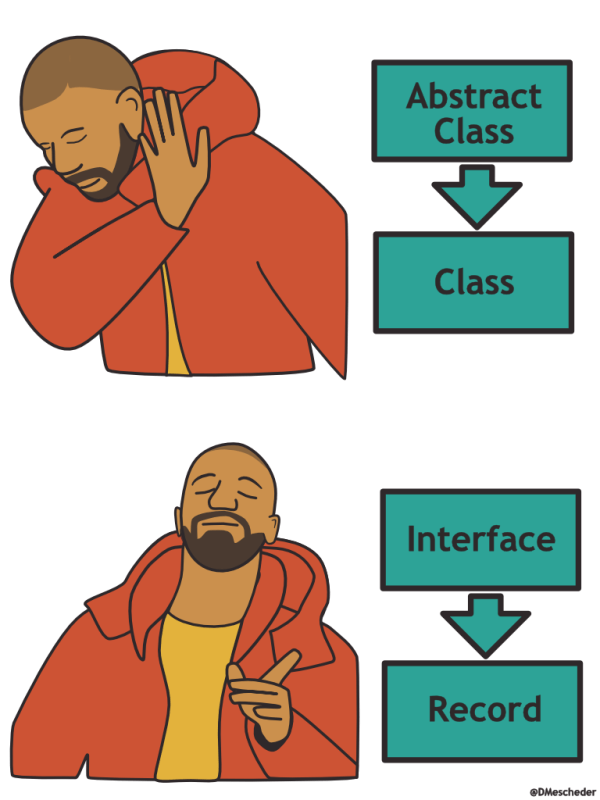
Records are part of the Java language since version 14. They are a useful feature for types that primarily capture data and avoid some of the boilerplate that Java is famous for. While many traditional class hierarchies could be translated to records, I found the discussion around which of them should be adapted to that... Continue Reading →

Availability vs Latency: A False Dichotomy

When designing distributed systems, we sometimes think of latency and availability as two technical dimensions to balance out in our designs. I would like to argue that a more useful perspective would be to see them as two sides of the same coin. When discussing the design of a system, we typically need to carefully... Continue Reading →

Clean Code: Simple and Easy

If we had to write a list of typical skills we expect of Software Engineers, “writing clean code” would probably be on it. However, the trouble with clean code is that it is hardly an objective measure. I don't think I've ever worked in a team where everyone had the same understanding of what it... Continue Reading →

A Solution to the Diamond Dependency Problem

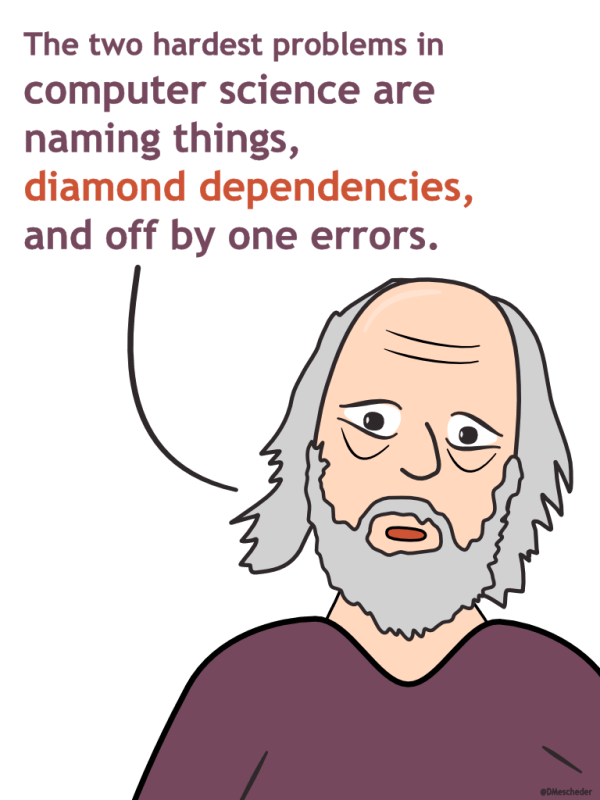
In this article, I want to explore a strategy of dependency management that enables transitive dependencies to evolve independently and to disentangle the gnarly problem of conflicting transitive dependencies. Dependency hell is a real place. The times I am struggling trying to find a matching set of dependencies are moments in which I ask myself... Continue Reading →

Cutting the System

Cutting up large systems into smaller components is one typical task of software architecture. Many modern architectures follow a (micro-) service pattern which is one particular family of strategies to decompose a larger system into smaller parts. It would be short-sighted to apply any such method without consideration of its respective strengths and weaknesses and... Continue Reading →

The Bright Future Of Property Based Testing

Automated tests are strange creatures, they are code that validates code, written by fallible beings. The messier the system under test, the messier the code required to test it. I have grown increasingly fond of property-based testing as a better technique of automated verification of software and in the following paragraphs I am going to... Continue Reading →

“What does this thing do?”

There are many principles and rules out there that offer guidance about good code design. I am generally skeptical about dogmas. Nevertheless, sometimes when I am deep in the trenches I do find it useful to have a rule of thumb to apply to quickly assess whether I'm on the right track. Such a rule... Continue Reading →

Blog at WordPress.com.

Up ↑